
Social media changes every day. New words appear, and people quickly adopt them in online conversations. Viral slang makes posts, comments, and videos more fun. From TikTok to Instagram, users create fresh expressions that connect millions of people. These words show humor, emotions, and modern digital culture.
Today, bahasa gaul di sosmed helps people understand online communication better. It includes trending phrases, meme words, and Gen Z expressions used across social platforms. Learning these terms makes it easier to follow viral trends and enjoy digital conversations. Whether you use social media for fun, work, or sharing ideas, knowing popular slang helps you communicate naturally. Online language keeps growing, and new expressions continue shaping how people connect.
🌟 Introduction(Viral Social Media Slang)
Social media changes quickly, and new words appear every day. Viral social media slang helps people share ideas, jokes, and emotions online. From TikTok to Instagram, users create fresh expressions that spread worldwide. This modern language connects communities and shows how digital culture keeps growing through creativity and daily conversations.
Many people search for slang meanings because they want to understand online conversations better. The phrase bahasa gaul di sosmed describes social media slang used in casual digital chats and posts. Learning these terms makes you feel more comfortable while exploring trends created by influencers and content creators across platforms.
🔥 What Is Viral Social Media Slang?
Viral social media slang includes words and phrases that become popular through apps like TikTok, Instagram, and X (Twitter). These expressions often appear in videos, comments, and memes before reaching millions of users. They represent online slang and internet slang while showing how people communicate across digital spaces with creativity.
The growth of slang happens because users enjoy sharing quick, memorable phrases. A single video can introduce a word that spreads everywhere within days. Terms like Rizz, Yeet, and It’s giving became common examples. These slang meanings and definitions help people understand jokes, captions, and conversations across social networks easily.
Read More :
OFC Meaning Simple Guide to What OFC Really Means in Text
The Power of Going Viral
Going viral can transform simple words into major language trends. A funny clip, meme, or influencer post can push expressions into everyday conversations. For example, people use Gas to describe something amazing and Yikes to show surprise. These moments create new connections between communities through shared humor and online experiences.
Memes play a huge role in spreading new expressions. Meme language and meme talk move quickly because people love short, funny reactions. Terms like Yikes meme, Rizz memes, and I’m dead often appear in comments. These phrases become digital shortcuts that help users express feelings without writing long messages.
Why It Matters in the U.S.
Viral slang matters in the U.S. because American internet culture changes constantly. People use Gen Z slang to express personality, emotions, and belonging. Brands, influencers, and content creators also follow these language trends to sound relatable. Understanding digital culture helps users communicate better across platforms like Reddit, Discord, TikTok, and Instagram.
Online language reflects more than simple words. It shows identity, humor, and community connections. People use slang during conversations with their squad or crew because shared phrases create a feeling of belonging. This language evolution proves that communication keeps changing as technology, entertainment, and social platforms continue growing.
💬 Most Popular Viral Social Media Slang in the USA
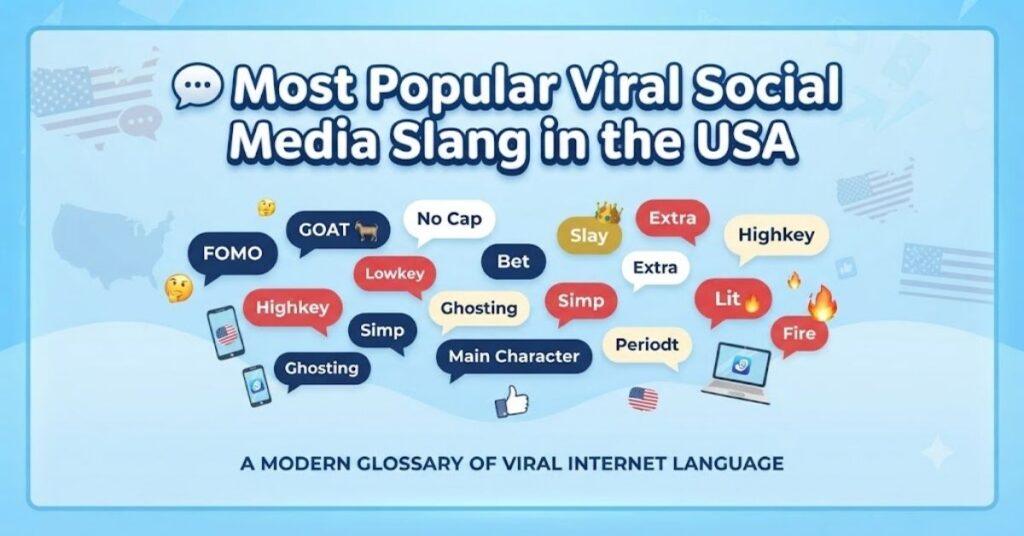
Across the United States, viral slang appears in many online communities. Users create phrases for friendships, reactions, gaming, fashion, and entertainment. Popular terms include No cap, FR (For real), Bruh, and I’m dead. These expressions make social media posts, captions, and conversations faster, funnier, and easier to understand.
Different communities create different styles of slang. Gamers use gaming slang like GG (Good game), OP (Overpowered), Sweat, and Cracked. Fashion lovers use terms connected with style and confidence, including Swag. These words show how online groups build their own language around shared interests and experiences.
Read More : What Does IG Mean? Texting Slang Explained Simply 2026
TikTok Slang That’s Taking Over
TikTok slang grows faster than many other forms of online language. Creators introduce words through videos, challenges, and trends that millions watch daily. Common examples include Low key for something subtle, Cooked or I’m cooked for feeling exhausted, and Vro for a friend. TikTok slang often influences other platforms quickly.
TikTok also creates unusual trends that become part of everyday conversations. Words like Brainrot, Shark brainrot, and German brainrot describe viral content habits and internet humor. Users discover these expressions through videos and comments. As trends change, new slang keeps appearing and shaping the future of online communication.
Meme Slang That Rules the Internet
Meme slang controls a huge part of online conversations today. People use funny phrases, images, and reactions to share feelings quickly. Meme language and meme talk spread through TikTok, Instagram, Reddit, and X (Twitter). Popular examples include Rizz memes, Yikes meme, and the Horse side eye meme.
Many viral memes create new slang meanings that people recognize instantly. The Bag girl meme, Girl failure, and Disgusting meme face became examples of internet humor. These trends show how online communities create shared jokes. They also explain how bahasa gaul di sosmed becomes popular among digital users.
Gaming & Online Chat Slang
Gaming communities create some of the fastest-growing online slang. Players on Discord and streaming platforms use short words to communicate during matches. Common gaming slang includes GG (Good game), OP (Overpowered), Sweat, and Cracked. These terms describe skills, reactions, and competitive gaming moments.
Gamers also influence general internet slang outside gaming spaces. For example, someone may call a talented person “cracked” even without playing games. Words like No cap, Guap, and Capping moved from online chats into everyday conversations. This language shift shows how digital culture connects different communities.
Fashion, Style & Self-Expression Slang
Fashion communities use slang to describe confidence, beauty, and personal style. Words like Swag represent a person’s attitude and appearance. Social media users often add fashion slang to captions and posts. These expressions help people share outfits, trends, and creative styles with their followers.
Style-related slang also connects with identity and emotions. A person wearing a bold outfit may say “It’s giving confidence” to describe the overall feeling. Influencers often use these phrases when sharing looks online. Fashion slang creates a fun connection between clothing, personality, and online expression.
📚 Everyday American Viral Slang You Should Know(Viral Social Media Slang)
American viral slang appears everywhere, from casual chats to professional social media posts. People use these words because they are short, expressive, and easy to understand. Terms like Bruh, FR (For real), Low key, and I’m dead appear frequently in online conversations.
Here are some popular examples:
| Slang | Meaning | Example |
| No cap | Truthfully | “No cap, this song is amazing.” |
| Tea | Gossip or information | “Spill the tea.” |
| Gas | Excellent | “That outfit is gas.” |
| Cooked | Exhausted or finished | “I’m cooked after work.” |
Social & Friendship Talk
Friendship slang helps people create stronger online connections. Words like Vro, Bro, Squad, and Crew show closeness between friends. These expressions often appear in comments, messages, and videos. They create a casual feeling that makes conversations warmer and more personal.
Social platforms allow friendships to grow through shared language. People use these terms with online communities and real-life friends. A group may create inside jokes using slang that only members understand. This style of communication strengthens digital relationships and reflects modern friendship culture.
Emotional & Motivational Slang(Viral Social Media Slang)
Social media users often share emotions through simple slang expressions. Words like Devoted, Worthy, and motivational replacements help people create inspiring captions. Many users combine emotional language with viral phrases to express hope, confidence, and personal growth in their posts.
Emotional slang also helps people discuss difficult moments. Someone saying “I’m cooked” may describe stress or exhaustion. Another person saying “You got this” shares encouragement. These phrases make online conversations feel more human because they allow people to express feelings quickly and naturally.
Sarcasm, Humor & Reaction Words
Sarcasm and humor create some of the most popular slang trends. Words like Bruh, Yikes, Yeet, and I’m dead show reactions without long explanations. Users add these phrases to comments when something feels surprising, funny, awkward, or unexpected.
Reaction slang works because people understand emotions instantly. A simple “Yikes” can show disbelief, while “I’m dead” can mean something is extremely funny. These expressions make online communication playful. They also keep viral social media slang connected with everyday American humor.
💡 Slang, Memes & Meaning — Why Americans Love It
Americans enjoy slang because it creates quick connections between people. Viral words become shared experiences across platforms. A phrase from a TikTok video can become common language within weeks. This constant movement represents language evolution and shows how digital culture changes communication.
Slang also reflects entertainment, music, and online communities. Influencers and creators introduce new expressions that followers repeat. These trends shape modern conversations and create a unique form of American internet culture. Understanding slang helps people follow conversations and participate in online communities.
Online Identity
Online identity plays a major role in slang popularity. People choose words that match their personality, interests, and communities. Using popular phrases can make users feel connected with others. It creates a sense of belonging among followers, friends, and digital groups.
Gen Z culture especially uses slang to show creativity and individuality. A person’s captions, comments, and posts often reflect their online personality. Words become more than communication tools. They represent emotions, humor, values, and connections within digital spaces.
Humor & Simplicity
Simple language often creates the strongest reactions online. Slang removes unnecessary words and delivers messages quickly. For example, saying “That’s gas” feels faster than explaining something is impressive. This simplicity helps content spread because people remember short and catchy expressions.
Humor makes slang even more powerful. Funny phrases become memorable because people enjoy sharing laughter. Meme culture depends on quick reactions and relatable jokes. Whether someone says Spill the tea or No cap, the expression creates instant understanding between users.
Creativity & Change
Creativity drives the constant growth of internet slang. Users transform old words into new meanings and create fresh expressions. This process keeps online communication exciting. Every year introduces new trends, from Gen Z slang to future digital phrases.
Language keeps changing with technology. AI, gaming, and social platforms influence upcoming vocabulary. Future expressions may include terms like Bot flex, Looped out, Soft drop, and Emo-core. These words show how people continue creating language around modern experiences.
🧩 List of Synonyms and Fun Word Replacements
Synonyms help users create better captions and messages. Many people replace common words with creative slang to make posts more engaging. These replacements appear in social media captions, comments, and casual conversations.
| Common Word | Fun Replacement |
| Cool | Gas |
| Friend | Vro |
| Amazing | Fire |
| Funny | Meme-worthy |
| Beautiful | Stunning |
| Money | Guap |
Using different words keeps conversations fresh. However, understanding the meaning matters before using slang. The right phrase creates connection, while the wrong phrase may sound unnatural. Good communication depends on context, timing, and audience awareness.
🌈 How to Use Viral Slang Without Sounding Cringe(Viral Social Media Slang)
Using slang can make conversations more enjoyable, but timing matters. People should learn the meaning before adding new phrases. Copying every trend may feel forced. Natural usage works better because slang should match your personality and communication style.
Viral social media slang changes quickly. A popular phrase today may disappear tomorrow. Following creators and online communities helps users understand current language trends. The goal is not to use every word but to communicate naturally and confidently.
Tip 1 — Know the Meaning
Every slang word has a specific meaning and background. Before using a phrase, check how people use it online. For example, Rizz relates to charm, while Tea means gossip or interesting information. Understanding context prevents confusion.
Learning slang meanings improves online communication. Resources like Meaningspot help users explore definitions and examples. Knowing the story behind words makes conversations easier. It also helps people respect the communities that created these expressions.
Tip 2 — Stay Updated
Internet slang changes faster than traditional language. New phrases appear through videos, memes, and online discussions. Following TikTok creators, Reddit communities, and social platforms helps users notice new expressions before they become mainstream.
However, staying updated does not mean chasing every trend. Good communication requires balance. Use phrases that feel natural and fit the situation. Authenticity always sounds better than forcing popular words into every conversation.
💬 Words of the Future — What’s Coming Next?
Future slang will continue developing through technology, artificial intelligence, and online communities. Digital communication keeps creating new ways to express ideas. Terms like Bot flex, Looped out, Soft drop, and Emo-core represent possible future language trends.
As platforms evolve, slang will follow new habits. Influencers, gamers, and content creators will continue shaping vocabulary. These future expressions will become part of online identity and digital culture. The story of slang never ends because people always find creative ways to communicate.
Conclusion
Viral social media slang shows how people connect through digital culture. The growth of bahasa gaul di sosmed proves that online communication keeps changing every day. These words bring humor, emotions, and creativity to social platforms like TikTok, Instagram, and X (Twitter). Understanding bahasa gaul di sosmed helps you follow trends and enjoy online conversations better.
Today, bahasa gaul di sosmed is more than simple slang. It represents identity, friendship, and modern internet culture. From memes to captions, these expressions create connections between users worldwide. Learning bahasa gaul di sosmed can make your digital experience easier and more enjoyable. As language trends continue growing, new slang will appear across online communities. Keeping up with bahasa gaul di sosmed allows you to understand jokes, posts, and conversations with confidence. This evolving language will continue shaping the future of social media communication.

Harry Collins is a passionate content writer at OkyTechy who specializes in explaining word meanings, internet slang, abbreviations, and digital terminology. He focuses on creating clear, informative, and reader friendly articles that help audiences better understand modern language and online communication.