
The internet has created many short words and abbreviations for faster communication. Some are easy to understand, while others can confuse new users. One term that many people see online is dni meaning. It appears in social media profiles, community rules, and online discussions. People use it to share personal boundaries and preferences. You can find it on Discord, TikTok, Instagram, and Tumblr. Knowing these terms helps you understand online conversations more clearly and avoid confusion when reading posts or messages from other users on different platforms.
Learning internet slang is useful because online language changes quickly. New words appear every year, and many become popular across different apps and websites. Understanding common abbreviations helps you communicate better and avoid misunderstandings. It also helps you respect online rules and personal choices. When you know what internet terms mean, using social media becomes easier and more enjoyable for everyone involved in the conversation.
🧠 What Does DNI Mean in Text?
DNI means “Do Not Interact.” People use it online to tell certain users not to contact them, reply to them, or join conversations with them. It is common on social media profiles and community pages. The phrase acts as a boundary and helps users control interactions in digital spaces.
Many people compare internet abbreviations when learning online slang. For example, users searching what does wyf mean in text may also come across DNI while exploring messaging terms. Unlike casual abbreviations, DNI focuses on privacy, comfort, and personal preferences in online communities and social conversations.
📱 Where Is DNI Commonly Used?
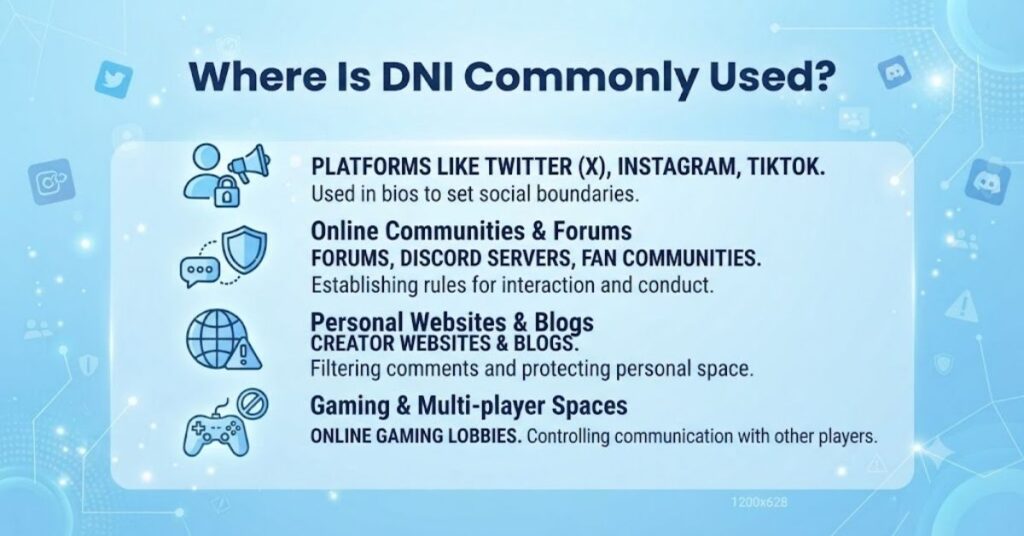
DNI appears on social media platforms where people interact with strangers and large communities. Users often place it in bios, profile descriptions, community rules, or pinned posts. It helps explain who should avoid engaging with their content, comments, messages, or discussions online.
The meaning stays mostly the same across platforms, although the wording may differ slightly depending on the community. Younger users, fandom groups, creators, and moderators use DNI frequently. It creates expectations before conversations begin and helps avoid unwanted debates or uncomfortable interactions.
📍 Popular Platforms:
DNI appears most often on platforms that support profiles, communities, and public discussions. Users include it in biographies or guidelines so visitors understand their boundaries before starting communication. Some websites encourage users to share preferences openly to improve community experiences and reduce conflict.
Popular places where DNI appears include:
- Discord servers
- TikTok profiles
- Instagram biographies
- X posts
- Tumblr pages
- Reddit communities
These platforms encourage public interaction, making clear boundaries more useful and easier to communicate.
🧩 Tone & Style:
The tone of DNI changes depending on how someone writes it. Some users keep it polite and respectful, while others make it firm and direct. The wording often reflects personal experiences, community culture, or the level of moderation required in a space.
For example, “DNI if you spread hate” sounds protective and community-focused. Meanwhile, “DNI with me at all” feels stronger and more personal. Tone matters because wording influences how readers interpret the message and whether they view it as friendly or strict.
💬 Examples of DNI in Conversation
People use DNI in messages, bios, and public posts to clarify interaction rules quickly. The phrase is usually short because online communication often values speed and simplicity. Most examples appear in profile descriptions rather than direct one-on-one conversations between friends or relatives.
Examples include:
- “Minors DNI.”
- “Spoiler accounts DNI.”
- “If you support harassment, DNI.”
- “Please DNI if you enjoy arguments.”
These examples show how people use the phrase to communicate expectations clearly and avoid misunderstandings before conversations even begin.
🕓 When to Use and When Not to Use DNI
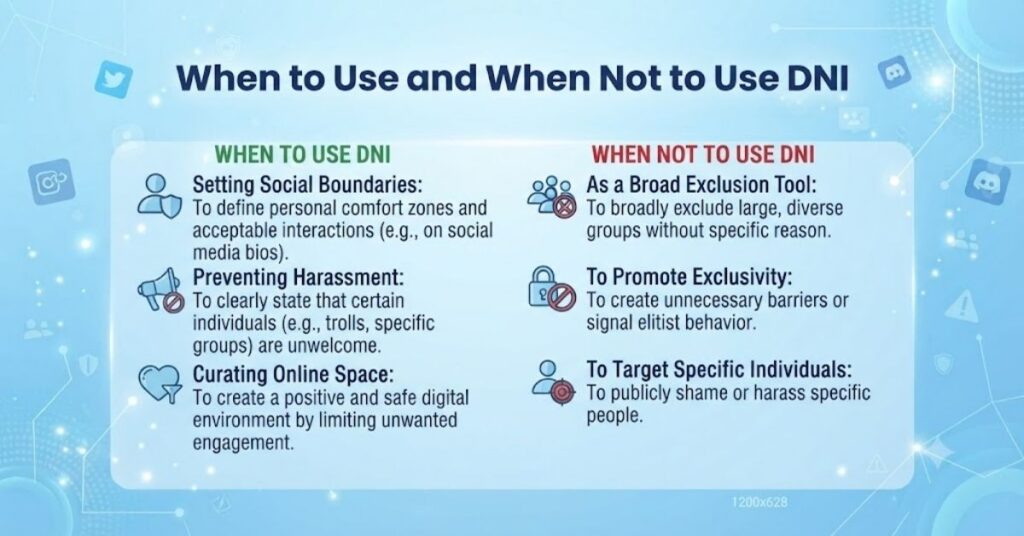
DNI works best when users want to establish clear online boundaries before interactions happen. It can reduce unwanted messages and create safer environments. However, it should not replace respectful communication or proper moderation tools when handling serious issues or harassment situations.
Using DNI responsibly matters because overly broad restrictions can confuse readers or create unnecessary tension. People should consider the audience, platform, and purpose before adding it to profiles or community spaces. Clear explanations usually work better than vague statements or emotional reactions.
✅ When to Use DNI
Use DNI when you want to protect your online experience and reduce interactions that may lead to stress or conflict. It works well in public communities where strangers frequently interact and personal boundaries are harder to maintain through normal conversation alone.
Good situations include:
- Setting community rules.
- Avoiding harassment.
- Protecting sensitive discussions.
- Managing fandom spaces.
- Reducing unnecessary arguments.
These uses help create expectations and encourage respectful behavior among participants in online communities.
❌ When Not to Use DNI
Avoid using DNI when the restriction feels unfair, confusing, or impossible to understand. Vague statements often create questions instead of solving problems. Readers may not know whether they belong in the restricted group or whether the rule applies to them.
DNI should also not replace direct communication with friends, coworkers, or classmates. Personal disagreements often require conversations instead of profile warnings. Using DNI in professional environments may appear unhelpful or overly aggressive if simpler solutions are available and appropriate.
🔄 Other Meanings of DNI in Text
Although “Do Not Interact” is the most common meaning, DNI can occasionally represent different phrases in technical or business environments. Context usually makes the intended meaning obvious, especially when the abbreviation appears outside social media or internet communities.
| Context | Possible Meaning |
| Social media | Do Not Interact |
| Technology | Digital Network Interface |
| Business | Departmental Network Information |
Readers should always consider where the abbreviation appears before deciding on its meaning.
🔄 Similar Slang Words or Alternatives
Many internet users prefer alternatives that communicate boundaries without using DNI directly. These phrases often sound softer or more specific. Some communities encourage descriptive language because it helps visitors understand expectations without confusion or unnecessary assumptions about restrictions.
Common alternatives include:
- Please respect boundaries.
- No direct messages.
- Keep discussions respectful.
- Friends only.
- Followers only.
These expressions communicate similar ideas while allowing users to explain expectations more clearly and politely.
🧾 Why People Use DNI in Texting & Social Media
People use DNI because online spaces can become overwhelming when anyone can comment or message freely. The abbreviation offers a quick way to establish limits without writing long explanations. This efficiency makes it popular among younger internet users and community moderators.
The phrase also reflects changing attitudes toward digital wellbeing and privacy. Many users value emotional safety and personal control online. DNI helps people communicate preferences clearly while reducing misunderstandings and encouraging more respectful interactions across different platforms and communities.
🛑 1. Setting Boundaries
Boundaries help people feel comfortable while sharing ideas, opinions, and personal experiences online. DNI gives users a simple method for expressing limits before conflicts occur. This proactive approach often prevents misunderstandings and reduces the need for difficult conversations later.
For example, an artist may write “AI image accounts DNI” to protect original work discussions. Another creator may restrict interactions from trolls or spam accounts. These boundaries create more positive environments and encourage healthier online communication between users.
🧠 2. Protecting Mental Health
Constant arguments and negative interactions can affect emotional wellbeing over time. Some users create DNI lists to reduce stress and avoid exposure to harmful behavior. This strategy allows individuals to enjoy online communities without feeling overwhelmed by conflict or criticism.
Mental health conversations have become more common online, and boundaries play an important role in those discussions. By limiting interactions with harmful accounts, users can focus on supportive conversations and maintain healthier relationships with social media and online communities.
📱 3. Controlling Audience
Creators often want specific audiences to engage with their content. DNI helps narrow interactions so conversations remain relevant and productive. This approach is especially useful for educational pages, support groups, and niche communities with focused interests and discussions.
For example, a support account for students may ask advertisers to avoid interacting with posts. This keeps conversations centered on the intended audience and prevents distractions that could reduce the value of discussions within the community environment.
🧑🤝🧑 4. Building Safe Communities
Community leaders often use DNI rules to encourage respectful behavior and discourage harmful actions. Clear expectations help members understand acceptable conduct before participating. This structure supports moderation efforts and contributes to healthier discussions among community members and visitors.
Safe communities usually depend on trust and shared values. When members know that harmful behavior is unwelcome, they feel more comfortable contributing ideas and experiences. DNI can support those goals when combined with fair moderation and respectful communication practices.
⚡ 5. Fast Communication
Online communication moves quickly, and users often prefer short messages that deliver information immediately. DNI works because it communicates a complete idea using only three letters. This efficiency makes it useful on platforms with limited space for profile descriptions.
Instead of writing several sentences explaining boundaries, users can use DNI and provide additional details if necessary. The abbreviation saves time for both writers and readers while maintaining clarity and supporting effective communication in fast-moving digital environments.
🧠 Is DNI Rude or Respectful?
Whether DNI feels rude or respectful depends on context, wording, and tone. Some people view it as a healthy expression of boundaries, while others consider it unfriendly. The audience often influences how the message is interpreted and received online.
Most communities accept DNI as normal internet language, especially among younger users and fandom spaces. Problems usually appear when the wording becomes insulting or unnecessarily aggressive. Respectful phrasing generally receives better reactions and creates fewer misunderstandings between participants.
😊 Respectful:
Respectful DNI statements explain boundaries without attacking anyone personally. They focus on behavior rather than identity and encourage positive interactions. This style communicates expectations clearly while maintaining kindness and professionalism in public online spaces and discussions.
An example would be, “Please DNI if you enjoy spreading misinformation.” The statement targets behavior rather than individuals. Readers understand the rule immediately, and the message avoids unnecessary hostility while still protecting the community and its members.
😐 Neutral:
Neutral DNI wording simply states preferences without emotional language or judgment. These statements usually feel practical rather than personal. They communicate limits clearly and efficiently while avoiding strong opinions or unnecessary explanations that could create confusion.
Examples include phrases such as “Minors DNI” or “Business inquiries only.” Readers can understand these expectations quickly because the language remains direct and objective. Neutral wording often works well for creators, moderators, and public-facing profiles online.
😠 Harsh:
Harsh DNI messages often include insults, accusations, or aggressive wording that may upset readers. Although boundaries remain important, hostile language can create conflict and reduce cooperation within communities that depend on respectful communication and mutual understanding.
For example, statements containing personal attacks may appear more confrontational than protective. Users should consider whether stronger language truly helps achieve their goal. In many situations, calm wording communicates the same message more effectively and professionally.
🧾 DNI Meaning Discord Explained
On Discord, DNI usually appears in server rules, member profiles, or channel descriptions. Moderators use it to explain who should avoid certain spaces or discussions. This helps organize communities and keeps conversations focused on their intended purpose and audience.
For example, a gaming server may write “spoiler accounts DNI” during a new game release. Another server may restrict advertisers or spam accounts. Discord communities often use these guidelines alongside moderation tools to maintain order and improve user experiences.
🧠 DNI vs BYI : What’s the Difference?
DNI means “Do Not Interact,” while BYI means “Before You Interact.” The first tells certain users not to engage, while the second shares important information readers should know before starting conversations or joining community activities online.
| Term | Meaning | Purpose |
| DNI | Do Not Interact | Sets boundaries |
| BYI | Before You Interact | Shares context |
Together, these terms help users create clearer expectations and healthier communication environments online.
FAQs
❓ What does DNI stand for?
The dni meaning starts with the phrase Do Not Interact, a common internet abbreviation.
People use the dni meaning to tell certain users not to contact or engage with them.
❓ What does DNI mean in text?
The dni meaning in text refers to setting personal boundaries during online interactions.
Most users apply the dni meaning in bios, posts, and social media profiles regularly.
❓ What is DNI meaning discord?
The dni meaning on Discord is usually Do Not Interact with certain members.
Server owners use the dni meaning to protect communities and guide conversations safely.
❓ Is DNI rude?
The dni meaning is not automatically rude because context changes its tone completely.
A respectful dni meaning statement sets boundaries without insulting or attacking other people.
❓ Where is DNI most used?
The dni meaning appears most often on Discord, TikTok, Tumblr, and Instagram platforms.
Users include the dni meaning in profiles, rules pages, and community descriptions frequently.
❓ Why do people use DNI?
People use the dni meaning to avoid conflict and unwanted online interactions daily.
The dni meaning also helps protect privacy, comfort, and community safety on platforms.
Final Thoughts
The dni meaning is simple but important in online communication. It stands for Do Not Interact and helps people set personal boundaries. Many users add the dni meaning to profiles, posts, and community rules. The dni meaning is common on Discord, TikTok, Instagram, and Tumblr. It helps users avoid unwanted messages and unnecessary arguments. Learning the dni meaning makes internet slang easier to understand and use correctly.
Today, the dni meaning has become a normal part of social media culture. Some people use the dni meaning to protect their privacy and mental health. Others use the dni meaning to create safe communities and friendly spaces. Understanding the dni meaning helps you communicate better online. It also helps you respect other people’s choices and boundaries on the internet.

Harry Collins is a passionate content writer at OkyTechy who specializes in explaining word meanings, internet slang, abbreviations, and digital terminology. He focuses on creating clear, informative, and reader friendly articles that help audiences better understand modern language and online communication.