
OOO is a common abbreviation used in digital communication. Many people see it in emails, work chats, and messages but may not know its meaning. what does ooo mean depends on the situation, but it usually stands for “Out Of Office.” It tells others that someone is away or unavailable for a short time.
People use OOO mostly in professional settings. Employees add it to emails when they are on vacation, traveling, or taking leave. It helps coworkers and clients understand why replies may be delayed. This simple abbreviation saves time and keeps communication clear. OOO can also appear in casual chats with a similar meaning of being away or offline.
🧠 What Does OOO Meaning in Text?
OOO meaning in text usually stands for “Out Of Office.” People use it to tell others that they are unavailable because they are away from work, traveling, or taking a break. This abbreviation appears often in emails, workplace chats, and messaging apps. It helps people quickly understand someone’s availability.
The phrase OOO meaning in text is mainly connected with professional communication. For example, an employee may write “I’m OOO until Monday” to explain their absence. If you are searching phrases like “what does wyf mean in text ”, remember that slang meanings depend on context, while OOO has a clearer workplace meaning.
Example in Professional Context:
In a professional setting, OOO is commonly used when employees create automatic email replies before leaving work. A message may say, “I am OOO from July 15 to July 20 and will respond after returning.” This helps coworkers, clients, and managers know when they can expect a reply.
Here are some common professional examples:
- “I’m OOO today due to a personal appointment.”
- “Sarah is OOO and will return next week.”
- “The manager is OOO for a business trip.”
Other Meanings in Casual Texting
Although OOO usually means “Out Of Office,” some people use it differently in casual conversations. The meaning may change based on the group, platform, or personal style. Friends might use OOO creatively as a joke, reaction, or short expression while chatting online.
Casual texting often includes many abbreviations, and users create new meanings regularly. However, OOO is less common among friends compared with workplace communication. Understanding the conversation topic helps you identify whether OOO refers to work absence or another informal meaning.
📱 Where Is OOO Commonly Used?
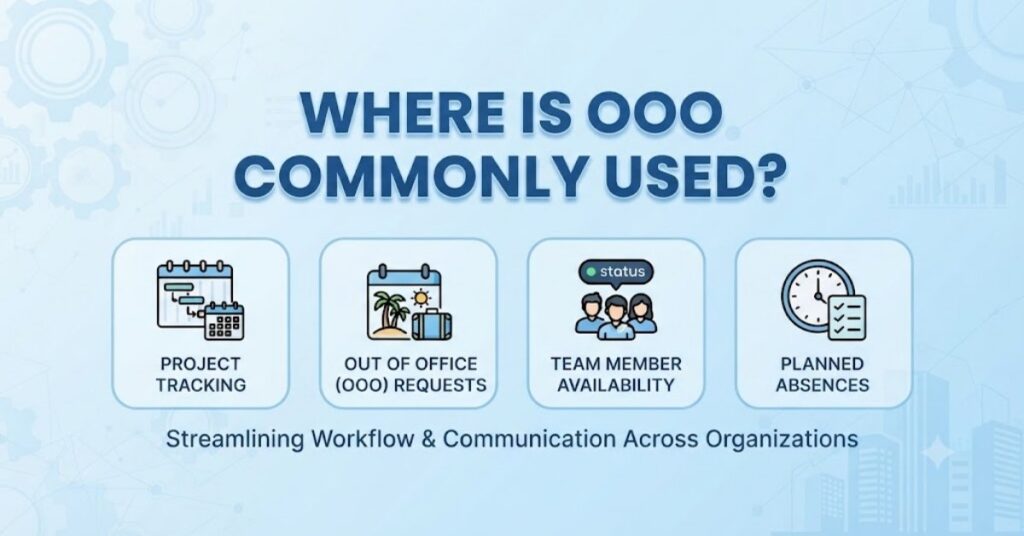
OOO appears in many digital communication spaces where people need to share their availability quickly. It is especially popular in workplaces, email systems, and team messaging platforms. Employees use it to manage expectations and prevent confusion when they cannot respond immediately to messages.
The abbreviation has become part of modern communication habits because remote work and online collaboration are common. Whether someone works from home or travels for business, OOO provides a simple way to announce their temporary absence without writing a long explanation.
📍 Professional/Work Context
In professional environments, OOO is one of the most recognized workplace abbreviations. Companies use it in emails, calendars, Slack messages, and team platforms. It creates clear communication between employees, customers, and partners when someone is unavailable during working hours.
A workplace table may show common uses:
| Situation | Example |
| Vacation | “I’m OOO this week.” |
| Business trip | “Mark is OOO for meetings.” |
| Personal leave | “I’ll be OOO tomorrow.” |
📍 Casual/Personal Context
In personal conversations, OOO is less frequent but can still appear. Some people use it when joking about being unavailable or disconnected. For example, someone might text, “I’m OOO from social media this weekend,” meaning they are taking a break.
Friends may also use OOO when discussing plans, events, or online activities. The abbreviation keeps messages short and matches the quick style of modern texting. Still, many casual users prefer clearer phrases like “away,” “busy,” or “not available.”
🧩 Tone & Style
The tone of OOO depends on where it appears. In a company email, it sounds professional and organized. In a personal message, it can feel relaxed or humorous. The same abbreviation can create different impressions depending on the relationship between the sender and receiver.
Using OOO correctly helps maintain clear communication. A formal workplace message should explain the absence and return date. A casual message can use shorter wording because friends usually understand the situation without extra details.
💬 Examples of OOO in Conversation
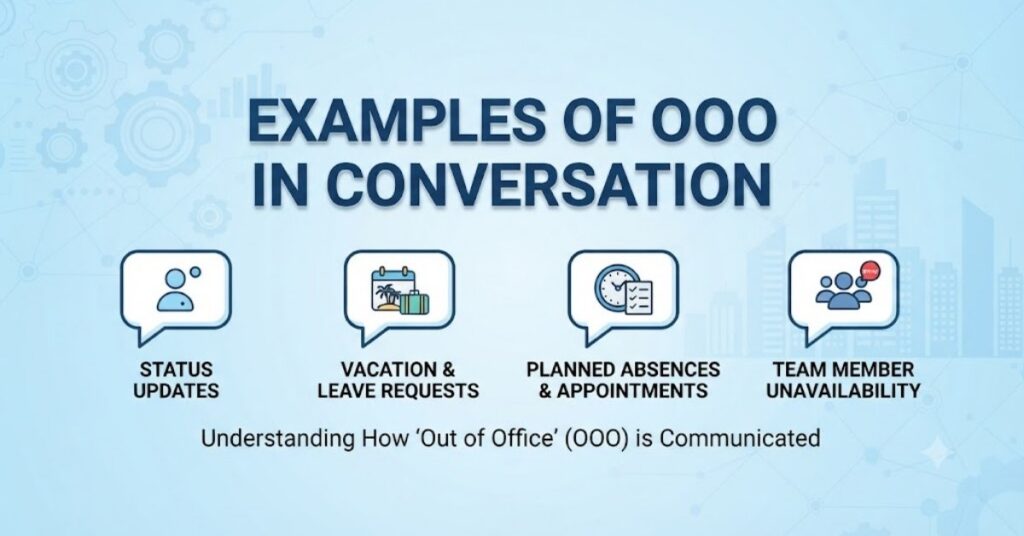
OOO examples show how people use this abbreviation in different situations. Most examples come from workplace communication, but some appear in casual chats. The meaning remains connected to being unavailable, away, or temporarily disconnected from normal activities.
Knowing examples makes it easier to understand messages quickly. When someone writes OOO, they usually want to avoid repeated questions about their availability. It saves time and provides important information in a short format.
Professional/Work Examples:
Professional conversations often use OOO for clear scheduling updates. Employees, managers, and business owners use it to inform others about their working status. These messages are usually polite and include details about when the person will return or who can help during their absence.
Examples include:
- “Hi, I’m OOO until Friday and will reply when I return.”
- “John is OOO today, so please contact Maria.”
- “Our team member is OOO for training.”
Casual Examples:
Casual examples of OOO are usually playful or simple. People may use it when they want to say they are unavailable for a short time. Friends might understand the meaning without needing additional explanation because online conversations often use shortened words.
Examples include:
- “I’m OOO this weekend, going camping.”
- “My brain is OOO after that long day.”
- “I’m OOO from my phone tonight.”
🕓 When to Use and When Not to Use OOO
Using OOO correctly depends on the situation and audience. It works best when you need to communicate temporary unavailability. In professional communication, it provides useful information and helps others plan their next steps without waiting unnecessarily.
However, OOO may not fit every conversation. Some people may not understand workplace abbreviations, especially in informal chats. Choosing simple language can sometimes make your message clearer and more friendly.
✅ When to Use OOO
You should use OOO when you are away from work, unavailable for meetings, or unable to answer messages quickly. It is useful for vacation notices, automatic email replies, and team updates. The abbreviation works well when your audience understands professional communication terms.
Good situations include:
- Setting an email vacation response.
- Informing coworkers about leave.
- Updating your team calendar.
- Explaining delayed replies.
❌ When Not to Use OOO
Avoid using OOO when your audience may not recognize the abbreviation. In personal conversations with people unfamiliar with workplace slang, writing “I’m away” or “I’m unavailable” may create better understanding.
You should also avoid using OOO without context. A short message like “I’m OOO” may confuse someone who does not know whether you mean work absence, travel, or another situation.
🔄 Other Meanings of OOO
OOO usually means “Out Of Office,” but it can have different meanings in other situations. Some online communities may use OOO as a creative abbreviation or personal expression. The meaning depends on the topic, platform, and conversation style. Always check the surrounding words before understanding any short form correctly.
In gaming, social media, or casual chats, users sometimes create unique meanings for abbreviations. However, these uses are less common than the workplace meaning. When someone writes OOO in a professional message, it almost always refers to being away from work or unavailable temporarily.
| Meaning | Context | Example |
| Out Of Office | Workplace | “I’m OOO today.” |
| Out Of Order | General situations | “The machine is OOO.” |
| Personal meanings | Casual chats | Depends on the group |
Some people confuse OOO with other internet abbreviations. For example, while searching phrases like “what does wyf mean in text ”, users may find many slang terms with multiple meanings. OOO is easier because its main definition remains connected with work communication.
🔄 Similar Slang Words or Alternatives
Several words and abbreviations can replace OOO depending on the situation. These alternatives help people communicate their availability without using the same phrase repeatedly. Simple words often work better when the receiver may not understand workplace abbreviations or online slang.
Common alternatives include:
- Away
- Busy
- Not available
- Taking leave
- On vacation
- Offline
In professional conversations, phrases like “on leave” or “unavailable” may sound clearer than OOO. For casual chats, people often prefer short expressions like “AFK” or “busy right now.” Choosing the right alternative depends on your relationship with the person receiving your message.
🧾 Why People Use OOO
People use OOO because modern communication requires quick and clear updates. This abbreviation allows users to share important information without writing long explanations. It works especially well in workplaces where employees regularly manage emails, meetings, and team responsibilities through digital platforms.
OOO has become popular because it creates better communication habits. It tells others that a person may not respond immediately. This simple message prevents confusion and helps coworkers, customers, and friends understand why replies might take longer than usual.
⚡ 1. Saves Time
One major reason people use OOO is that it saves time. Writing “Out Of Office” repeatedly can feel unnecessary, especially in busy workplaces. A short abbreviation delivers the same message quickly and keeps conversations more efficient.
For example, an employee can write “I’m OOO until Monday” instead of explaining their vacation details. This small shortcut helps professionals manage communication faster while keeping messages clear and easy to understand.
📱 2. Fits Professional Culture
OOO fits naturally into modern professional culture because businesses rely heavily on digital communication. Emails, calendars, and workplace apps often include OOO features that automatically inform others about an employee’s absence.
Many companies encourage employees to create OOO messages before vacations or leave periods. This practice improves teamwork because everyone knows who is available and when they can expect responses from unavailable colleagues.
😎 3. Works in Casual Chats
Although OOO started as workplace language, some people also use it casually. Friends may use it to describe being away from their phone, social media, or daily activities. It gives a playful way to explain temporary absence.
For example, someone may text, “I’m OOO this weekend, enjoying nature.” Here, OOO does not refer to office work but simply means being unavailable. Casual use depends on whether the people involved understand the abbreviation.
🔥 4. Matches Online Messaging Trends
Online communication continues to become shorter and faster. Abbreviations like OOO match the trend of using fewer words while sharing information quickly. Similar examples include LOL, BRB, and BTW, which became popular through texting and social media.
Digital users often prefer quick expressions because they save typing time. OOO follows this same pattern by providing a simple way to explain someone’s current status without creating a longer message.
🧠 Tone Considerations
The tone of OOO changes depending on where you use it. In a workplace email, it creates a professional impression. In a personal conversation, it can sound relaxed or humorous. Understanding the audience helps you decide whether OOO is the right choice.
Using the correct tone prevents misunderstandings. A manager may expect a clear and formal OOO message, while a friend may appreciate a shorter and casual version. Context plays an important role when using any abbreviation in communication.
Professional Tone
In professional communication, OOO should sound polite and informative. Employees usually include dates, return information, or alternative contacts. This approach helps coworkers and customers know what action to take while someone is unavailable.
Example: “I am OOO from August 10 to August 15. Please contact James for urgent requests.” This type of message creates a reliable and organized impression in workplace settings.
Casual/Fun Tone
In casual conversations, OOO can have a more relaxed style. People may use it as a fun way to describe taking a break from responsibilities. Friends might use it when leaving social media, avoiding phones, or enjoying personal time.
Example: “My energy is OOO after that workout.” This playful use changes the meaning slightly but keeps the idea of being unavailable or disconnected for a short period.
Neutral Tone
A neutral tone uses OOO in a simple and direct way. It does not sound overly formal or playful. This style works when you want to share information clearly without adding extra emotion or explanation.
Example: “I’m OOO today and will reply tomorrow.” This message works in many situations because it focuses only on availability. A neutral tone is useful when communicating with people you do not know well.
❓ FAQs:
❓ What does OOO stand for?
OOO stands for “Out Of Office.” It means someone is away from work or unavailable for a specific period. People commonly use this abbreviation in emails, workplace chats, and calendars to inform others about their absence.
It helps manage expectations because others understand that replies may take longer. Many employees set automatic OOO messages before vacations, holidays, business trips, or personal leave periods to maintain clear communication.
❓ Is OOO only professional?
OOO is mainly a professional abbreviation connected with workplaces and business communication. Most people recognize it as “Out Of Office” when they see it in emails or company messages.
However, some users also apply it in casual conversations. The meaning remains similar because it usually describes being away, unavailable, or disconnected from normal activities.
❓ Can I use OOO in casual texts?
Yes, you can use OOO in casual texts if the other person understands the meaning. Friends may use it to describe being away from their phone, social media, or daily routine.
Still, simple phrases like “busy” or “away” may work better with people who are unfamiliar with online abbreviations. Clear communication should always be the priority.
❓ Is it rude to write OOO?
No, writing OOO is not considered rude when used correctly. In professional settings, it is a helpful way to explain your absence and manage expectations.
However, sending only “OOO” without any explanation may confuse some people. Adding dates or a short message creates a more polite and professional impression.
❓ Are there alternatives to OOO?
Yes, several alternatives can replace OOO. People can write “away,” “offline,” “on vacation,” “busy,” or “not available” depending on the situation.
The best option depends on your audience. Workplace communication may require formal wording, while casual conversations can use shorter expressions that match everyday texting habits.
🧾 Final Thoughts
OOO is a simple abbreviation that makes communication faster and clearer. Its main meaning, “Out Of Office,” helps people share their availability in professional environments. It reduces confusion and allows coworkers, customers, and friends to understand when someone cannot respond immediately.
Although OOO mainly belongs to workplace communication, people sometimes use it casually. Understanding the context helps you choose the correct meaning. Whether you use OOO in emails, chats, or messages, keeping your audience in mind creates better and smoother conversations.
OOO represents how modern communication continues to become shorter and more convenient. Like many internet abbreviations, it saves time while delivering a clear message. Using it properly helps you communicate professionally while still fitting today’s fast digital communication style.

Harry Collins is a passionate content writer at OkyTechy who specializes in explaining word meanings, internet slang, abbreviations, and digital terminology. He focuses on creating clear, informative, and reader friendly articles that help audiences better understand modern language and online communication.